Address
Level 24, Imazium,
No. 8 Jalan SS21/37, Damansara Uptown, 47400 Petaling Jaya, Selangor Darul Ehsan
Contact
+6 03 7733 1697
[email protected]
Address
Level 24, Imazium,
No. 8 Jalan SS21/37, Damansara Uptown, 47400 Petaling Jaya, Selangor Darul Ehsan
Contact
+6 03 7733 1697
[email protected]

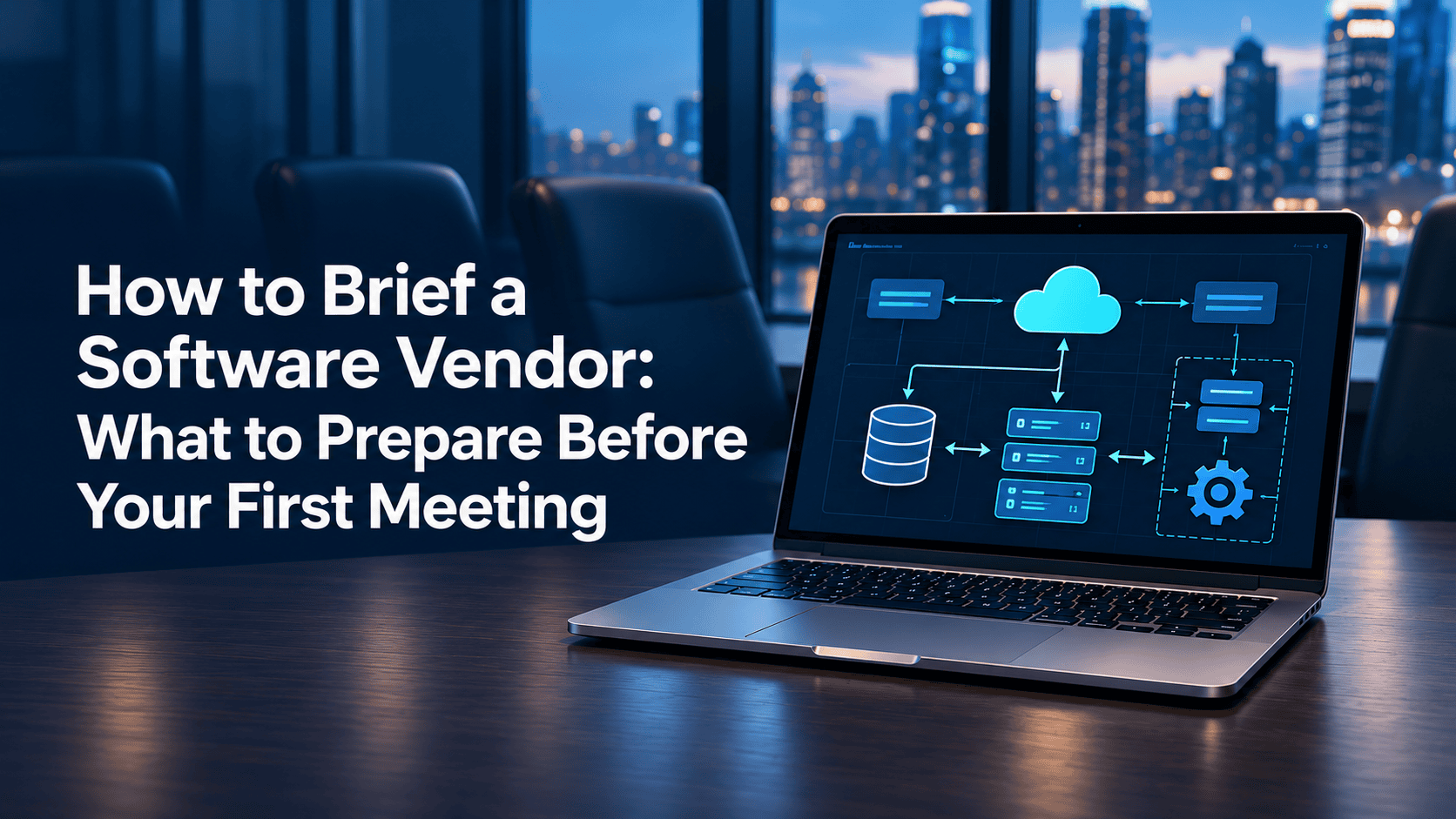
Briefing a software vendor poorly costs Malaysian businesses weeks of rework, budget overruns, and features that miss the mark. This guide shows you exactly what to prepare before your first meeting, how to structure your app development brief, and which details matter most when working with a software vendor in Malaysia.
A clear brief does three things. It helps vendors give you accurate quotes instead of ballpark guesses. It cuts discovery time in half. And it ensures you compare proposals on the same scope, not apples to oranges.
Most Malaysian IT managers walk into vendor meetings with a list of features and a rough budget. That approach works for buying off-the-shelf software, but custom development needs more. Developers need to understand your business rules, your data flows, your compliance obligations, and the problems you are solving. Without that context, even the best IT solutions provider will struggle to build what you actually need.
When full-stack custom applications are scoped poorly, teams spend the first month of a project rewriting requirements. A solid brief avoids that waste.
Your software requirements document does not need to be formal or long. It needs to be specific. Here are the sections that matter.
Start with the problem you are solving. Describe your current process, where it breaks down, and what a successful outcome looks like. Include who will use the software and how many users you expect in the first year.
Example: “Our sales team tracks leads in spreadsheets. We lose follow-ups, duplicate entries happen weekly, and managers cannot see the pipeline in real time. We need a lead management system that syncs with our email, sends reminders, and gives us a dashboard. We have 12 sales staff now and expect to grow to 20 next year.”
List what the software must do. Break it into modules or user roles. Use bullets, not paragraphs. Be concrete.
Avoid vague phrases like “user-friendly interface” or “robust reporting.” Describe the specific reports you need or the exact workflow a user will follow.
Tell your software vendor in Malaysia which systems the new application must integrate with, what hosting you prefer, and any compliance rules you must follow.
If you already use a technology stack, mention it. If your in-house IT team supports only certain databases or frameworks, say so upfront.
These are the performance, security, and usability standards your app must meet.
Give a realistic budget range and your target launch date. Vendors will tell you if it is feasible. If your budget is tight, say so. A good developer will suggest phased delivery or a minimum viable product first.
Include ongoing costs in your planning. Custom software needs hosting, backups, monitoring, and updates. Ask vendors to quote both build and run costs.
Templates speed up the briefing process. A software requirements document template gives you a checklist so you do not forget critical details. Here is a simple structure you can adapt.
| Section | What to Include |
|---|---|
| Project Overview | Business problem, goals, success metrics |
| User Roles | Who will use the system and what they need to do |
| Functional Requirements | Features, workflows, data fields, integrations |
| Technical Requirements | Hosting, platforms, compliance, existing systems |
| Non-Functional Requirements | Performance, security, scalability, availability |
| Design Preferences | Branding, reference apps, UI mockups if available |
| Budget and Timeline | Total budget, payment terms, go-live date |
| Support and Maintenance | Ongoing support, SLA expectations, handover plan |
Do not overthink the format. A well-organized Google Doc or Word file works fine. The goal is clarity, not polish.
Use this checklist two weeks before your first vendor meeting.
Bring this checklist and your software requirements document to every meeting. It keeps conversations focused and ensures you ask each vendor the same questions.
Here are the missteps that delay projects and inflate costs.
Telling a developer what to build without explaining why leads to literal implementations that miss your intent. Share the business outcome, not just the feature list. If you need a dashboard, explain which decisions the dashboard will inform.
Integration often consumes half the development budget. If your app needs to pull invoices from your accounting system or push orders to your warehouse, bring API documentation and sample data to the first meeting. If the vendor has to discover this three weeks into the project, expect delays.
If you are replacing an old system, you need to move data. Vendors need to know how much data, in what format, and how clean it is. A brief that forgets migration will get a quote that forgets it too.
Custom development for a business application typically takes three to six months from kickoff to launch, depending on complexity. Asking for delivery in four weeks forces vendors to cut corners or decline the project. Be honest about your deadline and ask what scope fits within it.
A low quote often means a vendor has understood less of your brief or plans to charge for changes later. Compare proposals line by line. Make sure each vendor is quoting the same features, the same integrations, and the same post-launch support.
Read more: 7 Signs Your Business Has Outgrown Excel and WhatsApp
When Malaysian businesses bring their app development brief to Zchwantech, the team starts with a structured discovery session. That session walks through your business process, clarifies your technical constraints, and identifies integration points. The goal is to translate your brief into a detailed scope document and a fixed-price proposal or phased roadmap.
Zchwantech has delivered platforms ranging from internal dashboards to a National Digital Identity system presented to the Timor-Leste government. The team holds over 100 AWS certifications and works closely with technology partners including AWS, Google, and Huawei. That depth helps them spot technical risks early, recommend the right hosting architecture, and design for scalability from day one.
If your brief includes compliance requirements under the Personal Data Protection Act 2010 or data residency in the AWS Asia Pacific (Malaysia) region, Zchwantech incorporates those into the architecture and deployment plan. You get a solution built to Malaysian regulatory standards, not a generic offshore template.
A brief is a high-level summary of your project, often one to two pages. A software requirements document is more detailed and includes functional specs, technical constraints, user stories, and acceptance criteria. For your first meeting, a solid brief is enough. The vendor will help you expand it into a full requirements document during discovery.
No. Focus on your business problem, your users, and your desired outcomes. A good developer will ask clarifying questions and translate your needs into technical architecture. You do need to know which systems you use today and any compliance rules you must follow, but you do not need to specify programming languages or frameworks.
Include enough detail that three different vendors would understand the same scope. Describe workflows step by step, name the systems you integrate with, and list every user role. Avoid jargon, but do not be vague. If you are unsure whether a detail matters, include it. The vendor will tell you if it is out of scope or optional.
Send it at least three days before the meeting. That gives the vendor time to review, research your industry, and prepare questions. You will have a much more productive conversation if the developer has already read your brief and thought through the technical approach.
Knowing how to brief a software developer turns your first vendor meeting from a vague chat into a focused planning session. A clear software requirements document, whether you start from a template or build your own, saves time, controls costs, and sets your project up for success. Prepare your business context, list your must-have features, document your integrations, and bring a realistic budget. When you are ready to move forward, a digital solutions company like Zchwantech can turn that brief into a working application built for Malaysian compliance, cloud infrastructure, and long-term growth.